
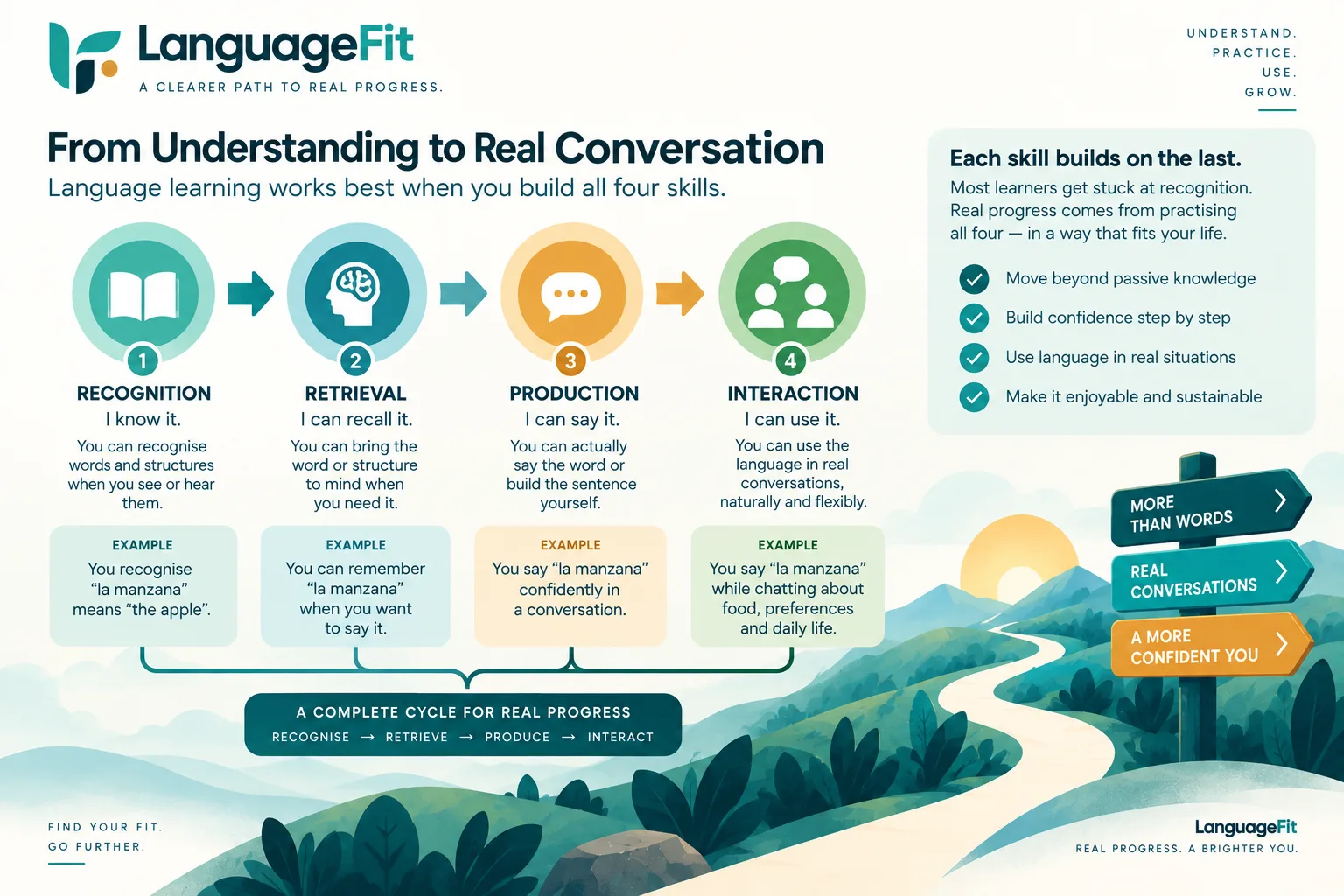
Recognising vocabulary and producing speech are different tasks. If you know words when you see or hear them but can’t retrieve them quickly enough to speak, add practice that requires you to recall, assemble and say language—not simply recognise another correct answer.
Why recognition can run ahead of speaking
Speaking asks you to retrieve words, form a sentence, manage pronunciation and respond in real time. Conversation adds listening and interaction on top. A study routine dominated by recognition can therefore improve knowledge without giving you enough practice performing those tasks.
Add deliberate output
- Answer simple prompts aloud before looking at a model answer.
- Retell a short piece of content in your own words.
- Record yourself and notice where retrieval repeatedly stalls.
- Use guided listen-and-respond material when independent practice suits you.
- Use conversation exchange for real interaction.
- Use a tutor or teacher when correction, guidance or accountability is important.
Keep useful input
The answer isn’t to stop listening or reading. Input supplies language to understand and reuse. The change is to make sure your routine also contains the output and interaction your speaking goal demands.
Choose the route that fits your constraints
If you prefer independent learning, build spoken retrieval into solo practice and add occasional interaction if useful. If you want regular correction, human feedback matters more. If you need both broad structure and spoken work, compare structured methods by how much relevant production they actually require.
Use a simple output ladder
Increase difficulty gradually: repeat a model, answer a familiar prompt without looking, describe something in your own words, then respond to another person. The point is not to make every session a conversation. It is to reduce how often speaking is the first moment you ask your brain to retrieve language unaided. For a worked solo exercise and troubleshooting table, see how to practise speaking a language alone.
If your current resource mostly trains recognition, it can still have a supporting role. Compare method types by the job they perform before replacing everything.
Use the LanguageFit Finder and make speaking your priority skill.
Pingback: Can Read a Language but Not Understand It Spoken? – LanguageFit