Restarting a Language? Don’t Automatically Start From Zero
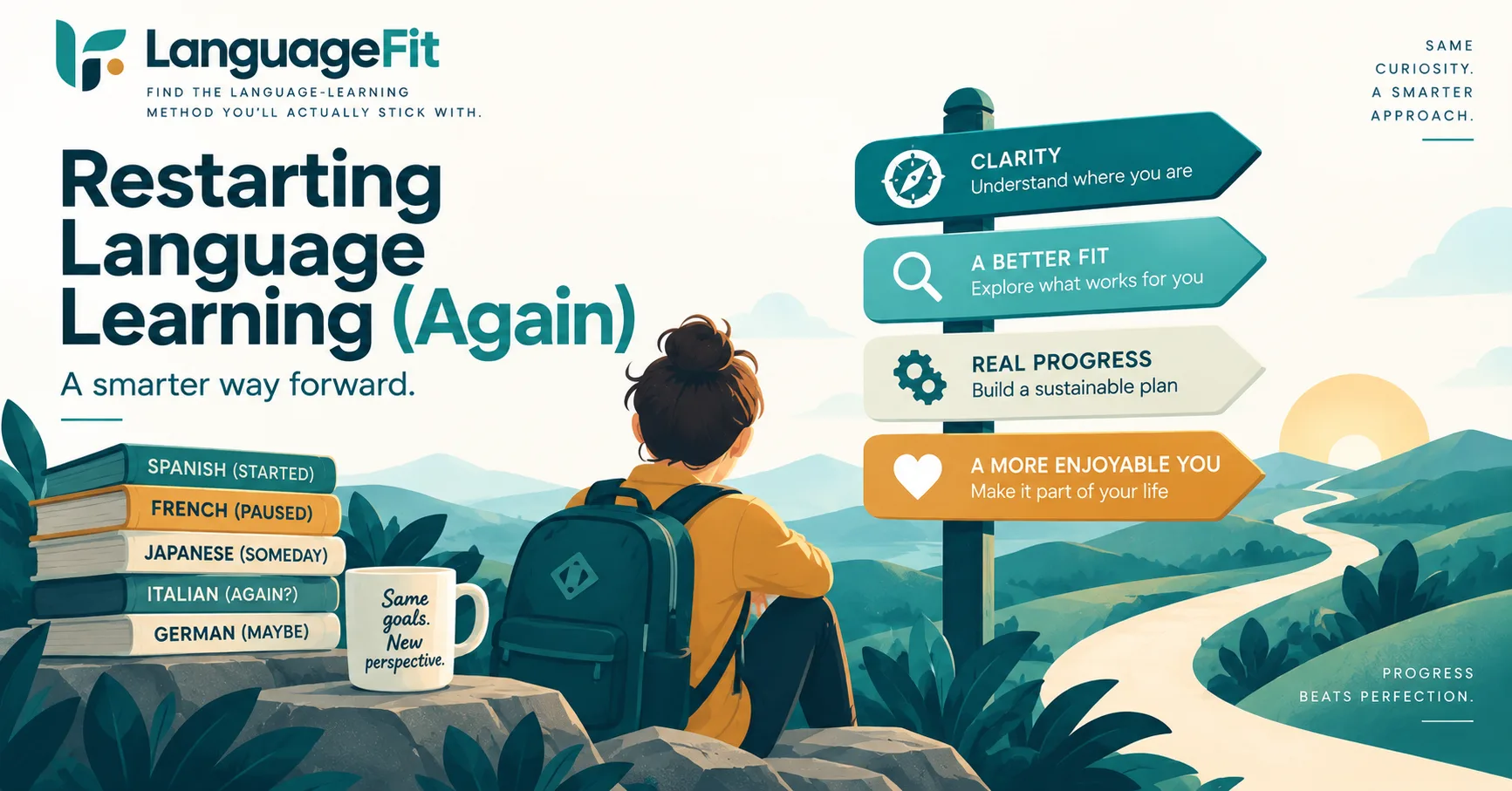
Returning to a language after a break doesn’t automatically mean starting the beginner course again. Some knowledge may be intact, some rusty and some genuinely missing. Sample what you can still understand and produce, then refresh selectively.
Run a restart scan
Check vocabulary, listening, reading, spoken production and your memory of the language’s basic structure. Don’t judge the whole language from the first awkward five minutes: retrieval often feels slower after time away.
Classify what you find
- Intact: you can still use or understand it reliably. Continue.
- Rusty: it becomes familiar quickly once prompted. Refresh it.
- Missing: it no longer makes sense or was never secure. Relearn it.
Build from the first real gap
If reading returns quickly but speaking doesn’t, restarting every beginner reading lesson wastes attention you could put into retrieval and conversation. If everything feels fragmented and you can’t tell what comes next, a structured refresher may be more useful.
Use a short re-entry week
Spend the first few sessions sampling rather than restarting. Revisit material from different points in your old path, try a little listening and reading, and attempt some unaided production. Record what feels intact, rusty or missing. Restart from the earliest point where missing knowledge actually blocks progress—not automatically from lesson one.
If stopping and restarting is the recurring problem, use the quitting diagnosis to check the underlying cause.
Use the LanguageFit Finder and choose the returning-after-a-break option.
Pingback: Stuck at Intermediate? Diagnose Your Language-Learning Plateau – LanguageFit