Stuck at Intermediate? Diagnose Your Language-Learning Plateau
Feeling stuck at intermediate level? Check whether progress is hidden, practice is too easy or one skill needs different work, then run a focused two-week experiment.
Feeling stuck at intermediate level? Check whether progress is hidden, practice is too easy or one skill needs different work, then run a focused two-week experiment.
Check whether your language practice is working with a simple four-skill baseline. Measure what you can do, not just your streak, study hours or lesson count.
If you can read a language but lose track when people speak, diagnose the listening gap and try a short listen–check–listen routine that fits your level.
A practical 15-minute language-learning routine matched to your goal, bottleneck and available time.
A practical solo-speaking exercise, with a diagnostic guide to what to practise when you get stuck.
Build a useful £0 language-learning system with structured lessons, gap practice and realistic limits.

Know vocabulary but struggle to speak? Learn why recognition can run ahead of production and choose practice that trains retrieval, response and interaction.
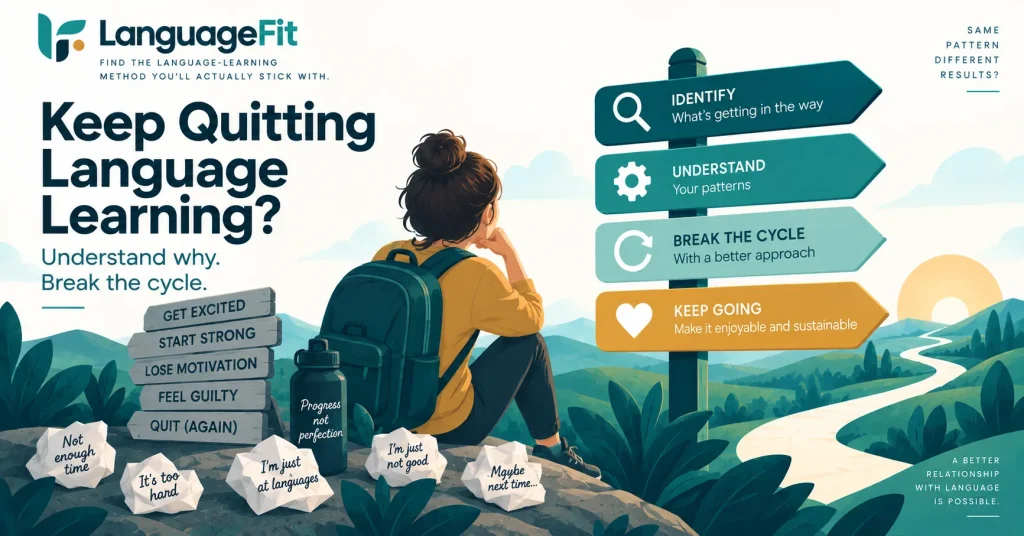
If you repeatedly start and stop learning a language, identify whether the problem is time, structure, boredom, overload, skill mismatch or something else.
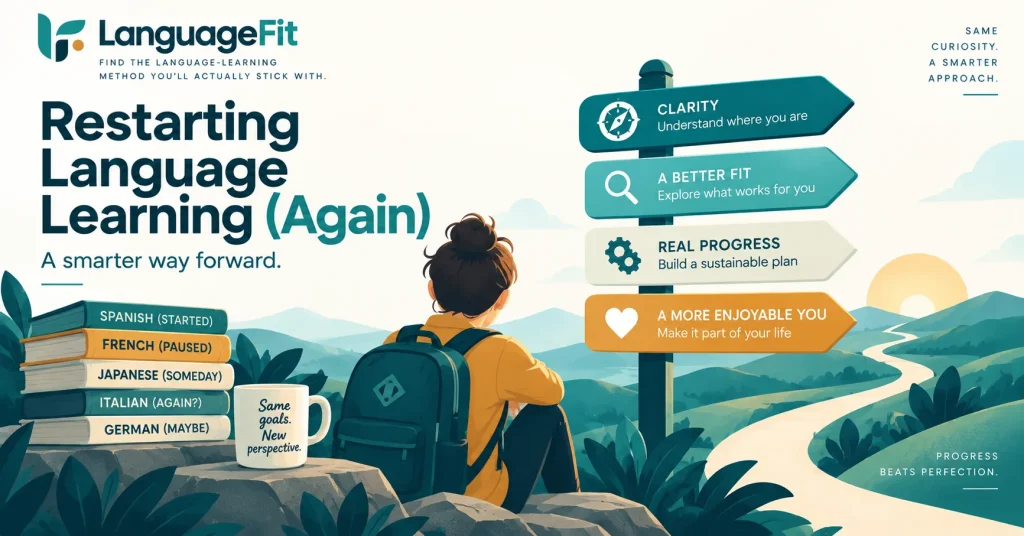
Returning to a language after a break? Work out what you’ve retained, what has gone rusty and where to restart without repeating everything.
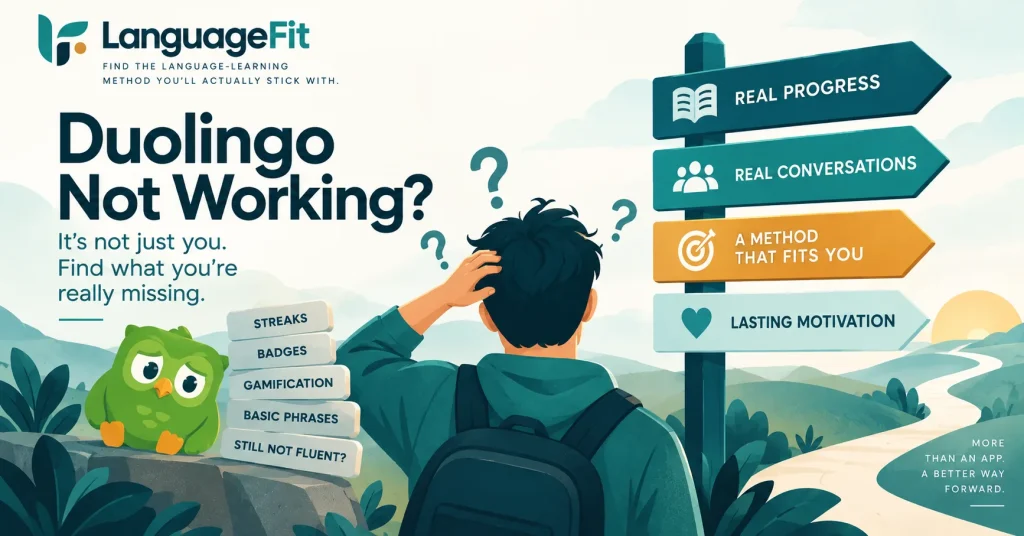
If Duolingo no longer feels useful, don’t just swap apps. Identify whether you need more speaking, listening, structure, explanation, input or variety first.